Recientemente, el Gobierno Popular Provincial de Hainan publicó el "15.º Plan Quinquenal para la Zona Piloto de Civilización Ecológica Nacional de Hainan (15.º Plan Quinquenal para la Construcción de un Hainan Hermoso)", en el que propone claramente promover de manera constante la prohibición de la venta de vehículos de gasolina para 2030. Hainan se convierte así en la primera provincia de China en cesar la venta de vehículos de gasolina.
De hecho, ya en 2022, el "Plan de Implementación del Pico de Carbono de la Provincia de Hainan" propuso prohibir por completo la venta de vehículos de gasolina en toda la isla para 2030. Cuatro años después, este objetivo se ha incorporado oficialmente al "15.º Plan Quinquenal", resolviendo así el asunto. Para el mercado de carga, esto representará sin duda un aumento visible; sin embargo, dentro de la energía fotovoltaica y almacenamiento de energíaindustria, nos preocupa más si las oportunidades para la energía fotovoltaica y el almacenamiento de energía en Hainan crecerán junto con el mercado de carga.
I. El objetivo firme de la prohibición de vehículos de combustión aumenta del 23,75% al 45%
Según los objetivos cuantitativos del 'Plan', se espera que la proporción de vehículos de nueva energía en Hainan aumente del 23,75% en 2025 al 45% al final del período del 15.º Plan Quinquenal. Esto representa casi el doble.
De hecho, la promoción de nueva energía vehículos por parte de Hainan ya se encuentra entre las líderes del país.
Los datos muestran que en 2025 Hainan promovió 116.800 vehículos de nueva energía, que representaron el 62,9% de todos los vehículos nuevos. En enero de 2026, la tasa de penetración de vehículos de nueva energía en la provincia había alcanzado el 55,13%, con un total de 544.600 vehículos, que representaban el 23,95%. En otras palabras, uno de cada cuatro vehículos en las carreteras de Hainan es un vehículo de nueva energía." Todos los vehículos son vehículos de nueva energía.
Para 2030, la proporción de vehículos de energía limpia entre los vehículos nuevos y de sustitución en los sectores de servicio público y operación social, así como la proporción de vehículos nuevos y de sustitución en el sector privado, alcanzarán ambas el 100%. Ya sean autobuses, taxis, vehículos de transporte por aplicación o automóviles privados de pasajeros, todos los vehículos nuevos estarán completamente electrificados.
Por supuesto, "prohibir la venta" no equivale a "prohibir la conducción". Después de 2030, solo cesará la venta de vehículos exclusivamente de gasolina; los vehículos de gasolina existentes aún podrán pasar las inspecciones anuales normales y circular legalmente por las carreteras. Sin embargo, el cambio integral de la nueva demanda ya ha trazado una clara curva de crecimiento para toda la cadena industrial de nueva energía.
II. La primera ola de beneficios en el mercado de carga ya se ha materializado
Los beneficiarios más directos de la prohibición de vehículos de gasolina son naturalmente las infraestructuras de carga.
Hainan ha mantenido constantemente una estrategia de "estaciones de carga primero, con un progreso moderadamente adelantado" en la construcción de puntos de carga. En agosto de 2025, la provincia de Hainan había construido un total de 4.895 estaciones de carga, 95 estaciones de intercambio de baterías y 232.900 puntos de carga (pistolas), logrando una proporción vehículo-punto de carga de 2,1:1, mejor que el objetivo inferior a 2,5:1 propuesto en el plan. La construcción de estaciones de carga ha logrado una cobertura del 100% en las áreas de servicio de las autopistas y todos los municipios de la provincia.
Más destacable es la plataforma "Una Red" de Hainan. A finales de diciembre de 2025, la plataforma había conectado 5.632 estaciones de carga, 95 estaciones de intercambio de baterías y aproximadamente 69.400 pistolas de carga, logrando un acceso del 100% a los puntos públicos de carga de toda la provincia. Los propietarios de vehículos pueden viajar libremente por la provincia utilizando una sola aplicación. Este modelo también ganó el Premio Especial de Innovación Eléctrica, convirtiéndose en un "Modelo Hainan" para la construcción de infraestructura de carga e intercambio de baterías en la provincia.
La mejora de la infraestructura de carga, a su vez, está acelerando la popularización de los vehículos de nueva energía. Los datos muestran que esto constituye un ciclo positivo. Sin embargo, el propio crecimiento del mercado de carga está creando otra demanda: energía fotovoltaica y almacenamiento de energía. ¿Por qué? Porque la carga concentrada de una gran cantidad de vehículos de nueva energía está ejerciendo una presión cada vez mayor sobre la red eléctrica.
III. La carga impulsa la integración de la energía fotovoltaica, el almacenamiento de energía y la carga
Los datos de la red eléctrica muestran que el aumento de la carga de vehículos de nueva energía está rompiendo los récords de demanda de la red eléctrica de Hainan.
Durante los picos de verano de 2023 y 2024, la carga total de la red eléctrica de Hainan alcanzó nuevos máximos 13 veces durante el período de "00:00-00:20". "Menos de 20 minutos después de la medianoche, la carga de la red aumentará rápidamente en más de 500.000 kilovatios, equivalente a añadir 680.000 aires acondicionados funcionando simultáneamente", describió Dai Yangyu, gerente del Centro de Control y Despacho de la Red Eléctrica de Hainan.
A finales de 2024, el número de vehículos de nueva energía en la provincia de Hainan había alcanzado los 409.000, y la carga de carga aumenta año tras año. El "pico de medianoche" será aún más evidente, y la capacidad de regulación del sistema de red eléctrica tendrá dificultades para hacer frente al ritmo de aumento de la carga de carga.
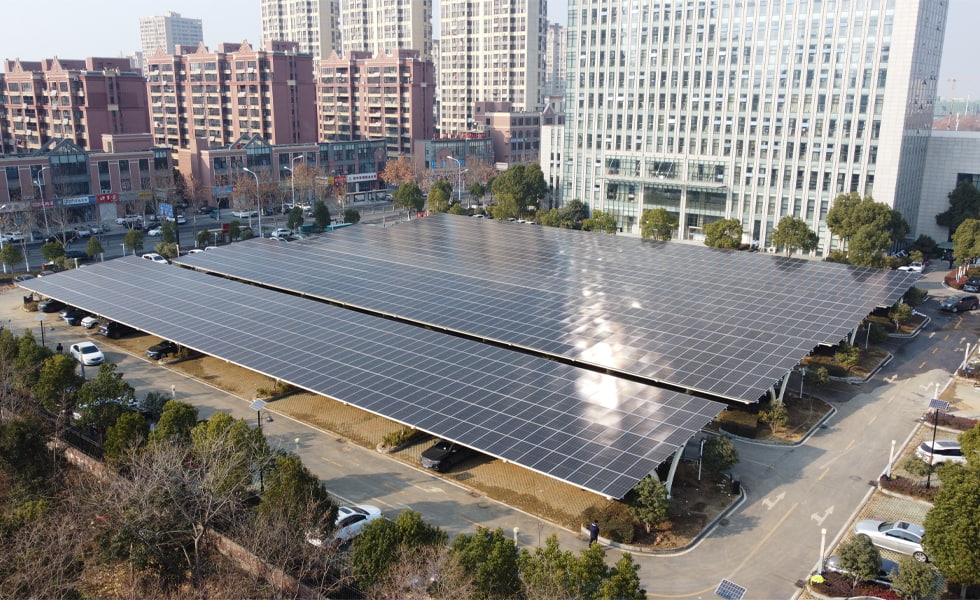
Este punto crítico es precisamente donde reside el valor de la integración de energía fotovoltaica, almacenamiento de energía y carga. La generación fotovoltaica + regulación mediante almacenamiento de energía + carga inteligente pueden absorber localmente electricidad verde y aliviar la presión sobre la red mediante la reducción de picos y el llenado de valles a través del almacenamiento de energía.
De hecho, Hainan ya cuenta con muchos pioneros en este campo.
El Área de Servicio de Cero Carbono de Baoting, construida alrededor del concepto integrado de energía fotovoltaica, almacenamiento de energía y carga, está equipada con tecnología inteligente integrada de energía fotovoltaica, almacenamiento de energía y carga, permitiendo la programación inteligente de la generación fotovoltaica, la carga y descarga del almacenamiento de energía y el consumo de energía de los terminales de carga. La instalación fotovoltaica de 1,3 MW del área de servicio se ha conectado oficialmente a la red y se espera que genere un promedio de 1,68 millones de kWh de electricidad al año, reduciendo las emisiones de dióxido de carbono en aproximadamente 1.379 toneladas anuales.
El Área de Servicio de Cero Carbono de Fengjiawan se centra en la "integración innovadora de nueva energía distribuida", desplegando almacenamiento de energía y puntos de carga V2G para construir un ecosistema energético de interacción coordinada entre "fuente, red, carga y almacenamiento". Ambos proyectos fueron seleccionados como casos típicos de desarrollo innovador en la integración del transporte y la energía en China para 2025.
El Proyecto de Demostración de Tecnología de Energía Inteligente Integrada de Datang Binhai en la Nueva Área de Jiangdong de Haikou también se ha puesto en funcionamiento, construyendo una arquitectura integrada que abarca "generación fotovoltaica-almacenamiento-generación eléctrica directa y flexible, almacenamiento de energía heterogéneo de múltiples fuentes, control del enrutamiento energético y gestión digital inteligente baja en carbono".
El proyecto logra un uso del 100% de la electricidad generada por la energía fotovoltaica distribuida, la generación de energía microeólica y los sistemas de almacenamiento de energía . La generación y almacenamiento de energía limpia pueden satisfacer el 77,2% de la demanda eléctrica del edificio de oficinas centrales de Datang.
Cuantos más puntos de carga haya, mayor será la carga de la red y más evidente será el valor de la integración fotovoltaica-almacenamiento-carga. Por lo tanto, no cabe duda de que la expansión del mercado de carga está creando los escenarios de aplicación más directos para la energía fotovoltaica y el almacenamiento en Hainan.
IV. El mercado de almacenamiento de energía de Hainan está despegando
Incluso dejando de lado el mercado fotovoltaico-almacenamiento-carga, el espacio de mercado del almacenamiento de energía en sí mismo en Hainan se está expandiendo rápidamente.
Los esfuerzos de Hainan para promover el almacenamiento de energía no deben subestimarse. Desde 2025, Hainan ha impulsado vigorosamente el modelo "nueva energía + almacenamiento de energía", completando una capacidad de almacenamiento de 1,247 millones de kilovatios, ocupando el primer lugar del país en términos de proporción de almacenamiento.
La comercialización del almacenamiento de energía independiente en Hainan también se está acelerando. En diciembre de 2025, la Central Eléctrica de Almacenamiento de Energía Datang Wenchang Chang'an completó con éxito su primera liquidación y compensación de negociación al contado de electricidad del día, marcando un avance histórico en la liquidación de precios basada en el mercado del almacenamiento de energía independiente en Hainan.
La diferencia de precios de electricidad entre horas punta y valle es el principal soporte para la viabilidad económica del almacenamiento de energía. La diferencia de precios punta-valle de Hainan se encuentra entre las más altas del país. En 2025, la mayor diferencia de precios punta-valle de Hainan alcanzó los 1,043 yuanes/kWh, ocupando el segundo lugar entre todas las provincias de China.
La implementación de empresas líderes envía una señal contundente. Tras firmar un acuerdo de cooperación estratégica con el Gobierno Provincial de Hainan, CATL aceleró su despliegue dealmacenamiento de energía industrial y comercialen Hainan. En octubre de 2025, CATL, Hainan Huihai New Energy y Hainan Haiyu Tinplate Industry firmaron un acuerdo tripartito para construir una estación demostrativa de microrred de cero carbono con supercarga fotovoltaica-almacenamiento en Haikou, cuya entrega está prevista para marzo de 2026. Esta estación demostrativa cuenta con una capacidad fotovoltaica instalada de 3MWp y una generación anual de electricidad de 3,9 millones de kWh, ahorrando 1333,8 toneladas de carbón estándar al año. CATL declaró que la tarificación eléctrica según el horario de uso con precios punta-valle implementada en Hainan proporciona condiciones de "carga y descarga" para los equipos de almacenamiento de energía, e incluso puede lograr "dos cargas y dos descargas".
V. No se pueden ignorar los desafíos
Actualmente, los proyectos integrados fotovoltaica-almacenamiento-carga en Hainan son principalmente proyectos demostrativos. Proyectos como los de Baoting, el Área de Servicio de Fengjiawan y la Nueva Área de Jiangdong, que combinan generación de energía, red eléctrica, carga y almacenamiento, son en gran medida proyectos piloto de políticas y demostraciones de referencia. Todavía existe una brecha significativa entre la demostración y la operación comercial a gran escala.
Además, imponer almacenamiento en estaciones de carga con baja utilización provocará que los equipos inactivos reduzcan los ingresos. Es crucial priorizar proyectos en escenarios con cargas más estables o mayores cargas punta, como transporte público, taxis, servicios de transporte bajo demanda, logística, alquiler de vehículos, aeropuertos, puertos y áreas de servicio de autopistas.
Al mismo tiempo, es importante señalar que las empresas líderes ya han entrado en el mercado. Por ejemplo, CATL está acelerando la construcción de su ecosistema de nueva energía mediante el aumento de capital en sus filiales, el despliegue de estaciones de intercambio de baterías y la implementación de una estrategia de red eléctrica de cero carbono. Los nuevos participantes deben encontrar un posicionamiento diferenciado y puntos de avance.
En general, el crecimiento seguro del mercado de carga proporciona la lógica de demanda subyacente para los proyectos fotovoltaica-almacenamiento en Hainan. La duplicación de la propiedad de vehículos de nueva energía del 23,75% al 45% representa un aumento sustancial de la carga de carga, que es precisamente donde reside el valor de la integración fotovoltaica-almacenamiento-carga y del almacenamiento para reducción de picos.
Sin embargo, el mercado aún necesita modelos de negocio más maduros, menores costes del sistema, una infraestructura de red eléctrica más completa y una orientación política más clara. Mientras tanto, Hainan, como la primera provincia de China en prohibir la venta de vehículos propulsados por gasolina, está, hasta cierto punto, abriendo camino para la integración del transporte de nueva energía y la energía en todo el país mediante su trayectoria de desarrollo del mercado fotovoltaico y de almacenamiento de energía.