¡Otro sistema residencial de energía solar ha sufrido una avería!
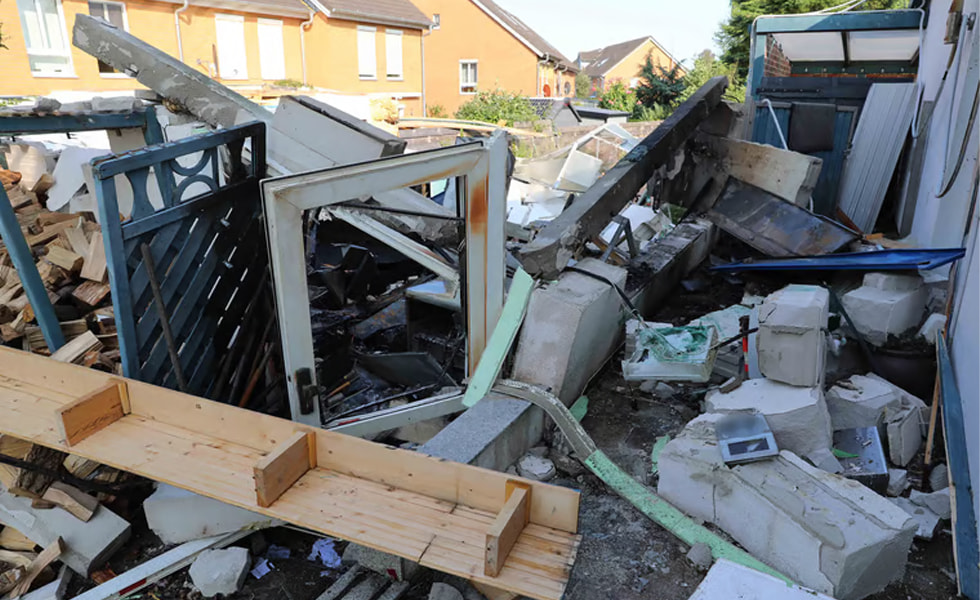
Según la Jefatura de Policía de Rostock en Alemania, a las 15:00 del 5 de julio se produjo un incendio en un cobertizo de madera situado en el patio de una casa unifamiliar en Bentwisch.
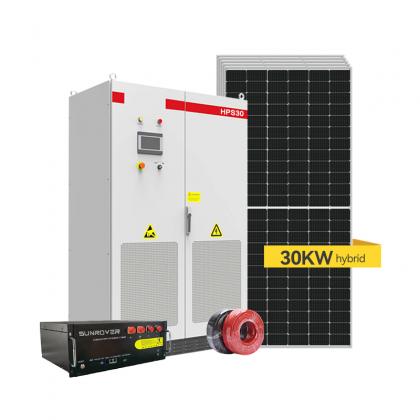
La investigación indica que un módulo de almacenamiento de baterías en un sistema de energía solar instalado dentro del cobertizo se sobrecalentó y provocó el incendio. Se produjo una explosión durante las labores de extinción, que desprendió el techo y provocó el colapso de toda la estructura. Tres bomberos voluntarios sufrieron heridas leves por la explosión. Los escombros proyectados también dañaron dos propiedades adyacentes. Los daños estimados ascienden aproximadamente a 40.000 €.
Tras el incidente, la policía acordonó la zona. El departamento de bomberos desplegó una excavadora y un gran tanque de agua para sumergir en agua los restos de la batería explotada y evitar nuevas reacciones químicas.
Un total de 75 bomberos de cinco brigadas de bomberos voluntarios—Bentwig, Klein Kussewitz, Mönchhagen, Poppendorf y Rövershagen—fueron desplegados en la operación de rescate. La fiscalía ha ordenado el envío de expertos para determinar la causa del incendio, y la policía criminal ha abierto una investigación.
Respecto a la explosión, Jörg Westphal, capitán adjunto de la brigada de bomberos voluntarios de Neustrelitz, explicó que los equipos fotovoltaicos son únicos porque, además de la corriente alterna convencional, también contienen un circuito de corriente continua, con corriente que fluye desde los módulos fotovoltaicos hasta el inversor. Además, este sistema de generación de energía produce electricidad continuamente en función de la intensidad de la luz solar en tiempo real.
Según la situación, la explosión probablemente fue causada por la sobrecarga del sistema fotovoltaico de almacenamiento de energía. (Las explosiones por sobrecarga fotovoltaica suelen referirse a explosiones causadas por la fuga térmica de la batería de almacenamiento de energía debido a una sobrecarga en un sistema "fotovoltaico + almacenamiento de energía". Las causas principales suelen ser fallos del sistema eléctrico o fallos en la gestión de la batería.)
¡El sistema residencial fotovoltaico de almacenamiento de energía explota dos veces en dos años!
Esta explosión de un sistema fotovoltaico en una villa alemana no es un incidente aislado. Justo el año pasado, también en Alemania, una villa con un sistema fotovoltaico sufrió una explosión.
Alrededor de febrero del año pasado, se produjo una grave explosión en Schleswig-Holstein, Alemania. Un edificio residencial sufrió daños severos; las fotos del lugar muestran importantes daños en las paredes exteriores.
La brigada local de bomberos voluntarios informó: "Un fuerte estruendo, seguido de una onda de presión. Después se elevó un humo denso." Se sabe que, aunque varias partes del edificio se incendiaron, el fuego fue controlado rápidamente. Afortunadamente, el edificio gravemente dañado estaba vacío en el momento del incidente, aunque podría ser demolido posteriormente.
Se sabe que se trataba de una villa unifamiliar equipada con instalaciones fotovoltaicas (FV) y de almacenamiento de energía. Según NDR (Radiodifusión del Norte de Alemania), las investigaciones preliminares indican que la explosión fue causada por un fallo en el sistema FV-almacenamiento. Al mediodía de ese día, la energía fotovoltaica había cargado por completo el sistema de almacenamiento de energía, pero la electricidad restante no se envió a la red y continuó alimentando las baterías de almacenamiento, lo que provocó la explosión.
Esta explosión es muy similar a la del año pasado, lo que llevó a algunos expertos del sector a creer que la causa de la explosión del FV residencial probablemente se deba a una sobrecarga, igual que el año pasado.
¿Cuáles son los riesgos potenciales de los sistemas residenciales solares FV y de almacenamiento de energía?
Como es bien sabido, existen diferencias significativas en el funcionamiento y uso de los sistemas solares FV residenciales en China y en el extranjero. En China, la mayor parte del mercado solar FV residencial se encuentra en zonas rurales, especialmente en provincias del norte con abundante luz solar, como Hebei, Henan y Shandong. Los pueblos y ciudades grandes y concentrados ofrecen amplias oportunidades para instalaciones solares FV residenciales.
Sin embargo, el consumo general de electricidad en las zonas rurales de China es relativamente bajo, y el consumo máximo de electricidad de los residentes suele producirse por la noche, cuando la energía solar no genera electricidad. Sumado al coste relativamente bajo de la electricidad para los residentes, la electricidad generada por estos sistemas solares FV residenciales se envía principalmente a la red. Los residentes pueden obtener ingresos compartiendo los beneficios de la venta de electricidad o simplemente alquilando sus tejados.
La situación es diferente en el extranjero, especialmente en Europa, donde los precios elevados de la electricidad son habituales. Los costes de electricidad residencial son varias veces superiores a los de China. Por ello, los usuarios europeos suelen instalar almacenamiento de energía junto con sus sistemas solares FV para formar un sistema completo. La electricidad generada por los sistemas solares FV se utiliza principalmente para autoconsumo, reduciendo así las elevadas facturas eléctricas.
Por lo tanto, los sistemas integrados de generación de energía fotovoltaica (FV) y almacenamiento de energía son populares en mercados con precios elevados de electricidad. Además, en comparación con los sistemas FV residenciales de China, muchas villas en Europa utilizan sistemas FV aislados de la red, lo que significa que estos sistemas no están conectados a la red y se destinan únicamente al autoconsumo. Los riesgos de sobrecarga de los sistemas FV suelen originarse en sistemas aislados de la red.
Actualmente, las plantas de energía FV aisladas de la red en Europa no se limitan al mercado residencial. Por ejemplo, se utilizan en los Alpes franceses, una granja en Austria y una cervecería en Polonia.
Las plantas de energía FV aisladas de la red, debido a sus componentes, incluidos paneles FV, baterías de almacenamiento de energía, inversores y complejos cableados eléctricos, y a que a menudo se instalan al aire libre o en tejados, también presentan diversos riesgos de seguridad.
Como es bien sabido, las plantas de energía FV aisladas de la red presentan riesgo de descarga eléctrica por corriente continua (CC) de alto voltaje. El voltaje de CC después de conectar los paneles FV en serie puede alcanzar cientos de voltios, superando ampliamente el voltaje seguro para el cuerpo humano. Las operaciones con tensión, un cableado incorrecto o daños en el aislamiento pueden provocar fácilmente descargas eléctricas mortales; los arcos de CC son difíciles de extinguir y pueden causar quemaduras graves con facilidad.
Además, los cables sueltos, el sobrecalentamiento de cables de baja calidad, las chispas en las uniones y la mala disipación de calor en inversores y controladores pueden provocar incendios. El "efecto punto caliente" causado por excrementos de aves, polvo u otras sombras localizadas sobre los paneles fotovoltaicos puede provocar un rápido aumento de la temperatura localizada, causando quemaduras de módulos o incendios.
Además del equipo fotovoltaico, la parte más vulnerable de un sistema fotovoltaico aislado de la red es la batería de almacenamiento de energía.
En primer lugar, en cuanto a la instalación, la mala ventilación, las altas temperaturas y la humedad en los sistemas residenciales de almacenamiento de energía acelerarán el envejecimiento de las baterías y aumentarán el riesgo de explosiones de gases inflamables o fugas eléctricas. Países como Alemania, Austria y Suiza, que instalaron sistemas fotovoltaicos en una etapa temprana, han entrado en la era posterior a la red, y los sistemas de generación fotovoltaica recién instalados generalmente adoptan el modo aislado de la red. Sus especificaciones de instalación exigen que las baterías de almacenamiento de energía se coloquen al aire libre o en un sótano con una puerta cortafuegos específica.
Además, la calidad de los productos de almacenamiento de energía adquiridos es crucial. Mezclar baterías nuevas y antiguas, o baterías de diferentes marcas y capacidades, puede provocar una carga y descarga desigual, causando sobrecarga y sobredescarga, reduciendo la vida útil de la batería y aumentando el riesgo de incendio. Las causas comunes de sobrecarga en sistemas fotovoltaicos incluyen fallos del sistema de gestión BMS, fallos del equipo de carga o una operación y mantenimiento inadecuados.
Actualmente, además de los sistemas solares FV residenciales convencionales, la energía solar FV de balcón también está ganando popularidad en Europa. Aunque no tiene la misma escala que la energía solar FV tradicional de tejado, sigue presentando riesgos potenciales importantes.
Cuando un usuario instala un sistema solar fotovoltaico (FV) para balcón, cuando la luz solar es abundante y la generación de energía supera la demanda eléctrica actual del hogar, el exceso de electricidad fluye de vuelta a la red pública, creando un flujo inverso.
Aunque devolver el exceso de electricidad a la red desde un sistema solar de balcón puede parecer una utilización eficiente de los recursos, este "flujo inverso" en realidad está prohibido y conlleva múltiples riesgos para los sistemas solares fotovoltaicos de balcón que no han pasado por procedimientos formales de conexión a la red. Por lo tanto, sin dispositivos anti-retorno, estos sistemas solares fotovoltaicos de balcón podrían convertirse en un "asesino oculto" de la red eléctrica.
Este caso alemán vuelve a poner de relieve los posibles riesgos de seguridad de los sistemas solares fotovoltaicos residenciales. Para los usuarios, aunque las plantas de energía solar son un motor importante de la energía limpia, los productos fiables y un mantenimiento adecuado son igualmente cruciales para la seguridad.