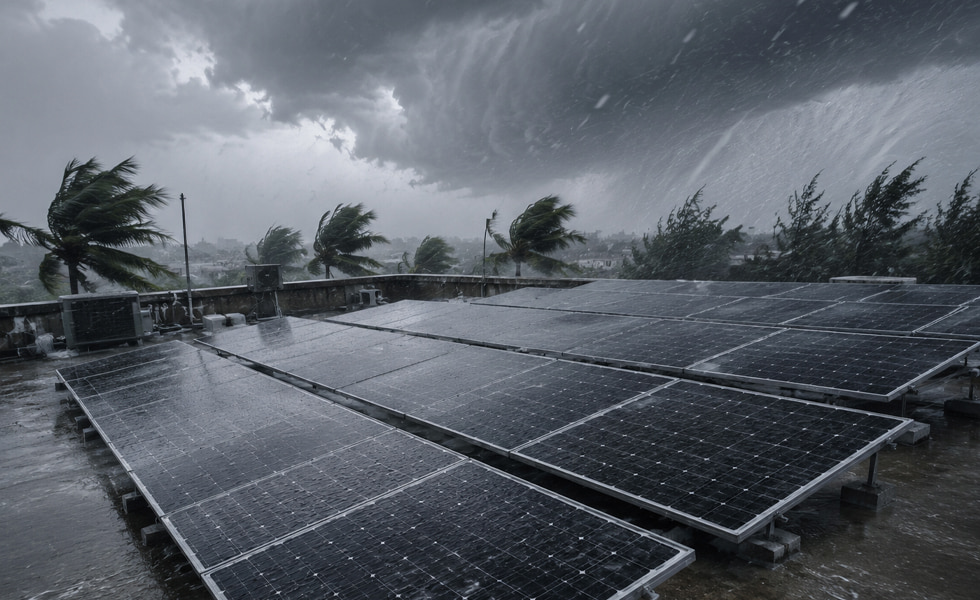
La industria fotovoltaica se enfrenta a una serie de desafíos, uno tras otro.
Recientemente, tras el tifón Bavi, el tifón Dolphin se está desplazando hacia el interior, trayendo fuertes vientos y lluvias intensas a muchas zonas de las provincias de Zhejiang, Shanghái y Jiangsu. Las ciudades costeras están sufriendo graves inundaciones, lo que ha provocado anegamientos de distintos grados, y algunas líneas ferroviarias han suspendido sus operaciones.
El tifón Dolphin se intensificó rápida y persistentemente desde su formación. En las 48 horas posteriores a su formación, se fortaleció rápidamente hasta alcanzar el nivel de supertifón, llegando a una intensidad máxima de 65 metros por segundo (por encima del nivel 17), convirtiéndose en el segundo tifón más fuerte de este año. Mantuvo la categoría de supertifón durante 5,5 días y una intensidad de tifón fuerte durante 9 días.
Cabe destacar que el impacto de Dolphin no se limita a las provincias costeras del sureste de Jiangsu, Zhejiang y Shanghái. Según la información publicada por "China Weather", el tifón o sus remanentes se combinarán con aire frío después del día 12, y el impacto continuará al menos hasta el final de esta semana. Este evento de lluvias en el norte de China se caracteriza por su intensidad extrema. Las provincias de Henan y Hebei experimentarán las lluvias más intensas desde el inicio de la temporada de lluvias, con especial atención necesaria en la zona de las montañas Taihang para mitigar las precipitaciones extremas causadas por el efecto de ladera de barlovento.
Del 11 al 13 de octubre, el oeste de Shandong, el sur de Hebei y Henan deben estar especialmente atentos a precipitaciones de 400-600 mm. Las lluvias acumuladas en algunas zonas podrían superar las del punto de llegada a tierra, y áreas localizadas del oeste y norte de Henan y del sur de Hebei podrían superar los 700 mm.
Además de Henan, Shandong y la región Beijing-Tianjin-Hebei, también se esperan lluvias intensas o torrenciales en Liaoning y otras zonas este fin de semana.
¡El tifón Dolphin golpea! ¡Las bases de los paneles solares aplastan automóviles!
Este tifón se aproxima con gran fuerza. Algunos paneles solares propietarios de las provincias costeras fueron tomados por sorpresa por el tifón Dolphin, después de haber resistido apenas el tifón Bavi.
¡El impacto de este tifón es incluso más grave que el de Bavi! El 10 de agosto, según videos publicados por internautas de Zhejiang, una central solar fotovoltaica en una azotea, incluidos sus paneles solares y la base de soporte, fue volcada violentamente por los fuertes vientos del tifón Dolphin.
Aún más aterrador, la base de hormigón, junto con su estructura de soporte, cayó sobre un automóvil estacionado debajo. Debido al peso de la propia base de hormigón combinado con la energía potencial gravitatoria de la caída, el techo del automóvil estacionado debajo quedó atravesado en los lados del conductor y del pasajero, y el maletero quedó completamente aplastado, dejando el vehículo prácticamente siniestrado. Afortunadamente, no había nadie dentro del automóvil cuando cayó.
Mientras tanto, debido a que el área sobre la que cayeron los paneles solares era extensa y dispersa, otros vehículos cercanos también sufrieron daños de distintos grados.
Energía solar en tejados: ¿Cómo resistir la "prueba del tifón"?
Ante estas circunstancias imprevistas, ¿cómo pueden las centrales solares evitar pérdidas o minimizarlas? Para los propietarios, la protección de las centrales solares no puede depender de medidas de último momento; en su lugar, debe establecerse un sistema integral de protección durante todo el ciclo de vida que abarque la selección del sitio, el diseño, la operación y el mantenimiento, la respuesta ante emergencias y los seguros.
En primer lugar, en la selección del sitio, los riesgos se reducen desde el inicio. Durante la etapa de planificación, deben realizarse evaluaciones de riesgo basadas en datos meteorológicos históricos y en la probabilidad de eventos meteorológicos extremos. Evitar llanuras de inundación y zonas de alto riesgo de desastres geológicos es un requisito fundamental. La norma obligatoria del Ministerio de Vivienda y Desarrollo Urbano-Rural, "Especificaciones para proyectos de generación de energía solar (borrador para comentarios)", exige explícitamente que el estándar de control de inundaciones para las áreas de conjuntos fotovoltaicos no sea inferior al nivel máximo de agua (marea) de 30 años. Esto significa que las condiciones hidrológicas deben considerarse plenamente durante la selección del sitio, y no se permite la negligencia.
En comparación con los paneles fotovoltaicos instalados directamente sobre tejados, las centrales fotovoltaicas que requieren bases y soportes en tejados presentan mayores riesgos durante eventos meteorológicos extremos. Por lo tanto, debe garantizarse estrictamente la calidad de los materiales utilizados para las bases de hormigón y los soportes fotovoltaicos.
En términos de diseño, los módulos fotovoltaicos deben utilizar pilotes de doble fila y refuerzos diagonales para mejorar la resistencia al arrancamiento de la cimentación del soporte. La conexión entre el marco del módulo y el bloque de presión debe reforzarse para evitar desprendimientos. El nivel de seguridad del soporte fotovoltaico no debe ser inferior al nivel tres, y el nivel de seguridad de la cimentación del soporte no debe ser inferior al nivel de seguridad de la estructura superior del soporte. Para sistemas de seguimiento, el sistema debe tener la capacidad de colocarse en una posición segura.
Además, el grado de protección de los equipos eléctricos exteriores no debe ser inferior a IP54.Inversores, cajas combinadoras, subestaciones transformadoras y compartimentos de almacenamiento de energía deben reforzarse mediante un sellado e impermeabilización mejorados, bases elevadas y sistemas adicionales de bloqueo y drenaje de agua. Las subestaciones ubicadas en zonas bajas deben estar equipadas previamente con equipos de bombeo, y los puntos de entrada de agua deben sellarse para evitar daños por agua, cortocircuitos y riesgos de explosión.
Además de los preparativos iniciales, la falta de mantenimiento rutinario también puede provocar fallos en momentos críticos.
Es importante saber que las 24-48 horas antes de un tifón son una ventana crítica que determina el destino de una central eléctrica. Antes de la llegada de un clima extremo, es necesario inspeccionar los bloques de presión centrales, los bloques de presión laterales y los pernos de fijación, y apretar, sustituir o reparar cualquier elemento de fijación flojo, oxidado o ausente. Revise las vigas de soporte para detectar curvaturas, deformaciones y grietas. Las centrales eléctricas antiguas, los tejados orientados al viento y los conjuntos de gran extensión deben reforzarse con tirantes resistentes al viento y sacos de arena como contrapeso. Dado que los marcos de los componentes están expuestos a la intemperie durante largos periodos, unas inspecciones rutinarias insuficientes pueden agravar problemas potenciales como fijaciones flojas y soportes oxidados o agrietados durante vientos fuertes.
Sustituya inmediatamente los sellos de las puertas de los gabinetes de inversores y cajas combinadoras si muestran signos de envejecimiento. Selle los orificios de entrada de cables y las separaciones de las bandejas de cables para evitar el reflujo del agua de lluvia. Inspeccione las uniones de los cables de CA y CC para evitar fugas y chispas durante el clima lluvioso.
En caso de condiciones meteorológicas extremas graves, puede optar por desmontar completamente y conservar los módulos fotovoltaicos, como se mencionó anteriormente en el caso del propietario de Zhejiang, y reinstalarlos después de que el clima vuelva a la normalidad. Aunque esto implica costes adicionales de instalación y desmontaje, es mucho menor que la pérdida de una central eléctrica completa volcada y destruida.
Por supuesto, incluso con la protección más completa, el poder destructivo del clima extremo a veces puede superar las expectativas. En tales casos, los seguros son el último recurso para mitigar las pérdidas.
El seguro contra desastres naturales para centrales fotovoltaicas cubre los daños a equipos causados por terremotos, inundaciones, tifones, granizo, tormentas de arena, etc., y realiza pagos basados en las pérdidas reales. La destrucción total puede ser compensada según el coste de reemplazo. Sin embargo, debe tenerse en cuenta que los defectos del equipo, el uso excesivo y el envejecimiento no están cubiertos.
Actualmente, la industria de seguros también está innovando constantemente. Algunas instituciones han lanzado productos financieros como el "seguro meteorológico de activos de carbono". Los reguladores financieros de algunas regiones están guiando a las instituciones de seguros para desarrollar productos de seguros integrales que cubran daños a la propiedad, pérdidas de ingresos por generación eléctrica y responsabilidad civil.